Azure Bicep Resource-Derived Types and Member Access Explained
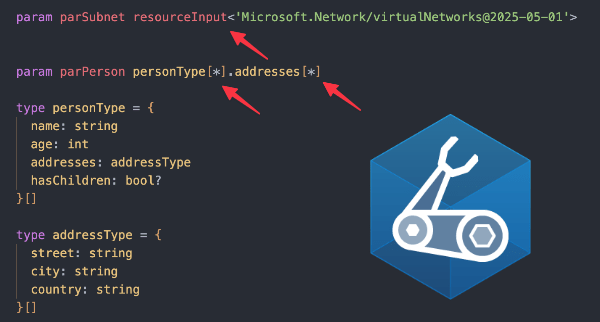
Azure Bicep has become much better over the years at helping you write strongly typed Infrastructure as Code. With features such as user-defined types, typed variables, and resource-derived types, you can make your templates more predictable and easier to maintain. Recently I noticed the [*] syntax which can look a bit strange when you see … Continue reading Azure Bicep Resource-Derived Types and Member Access Explained
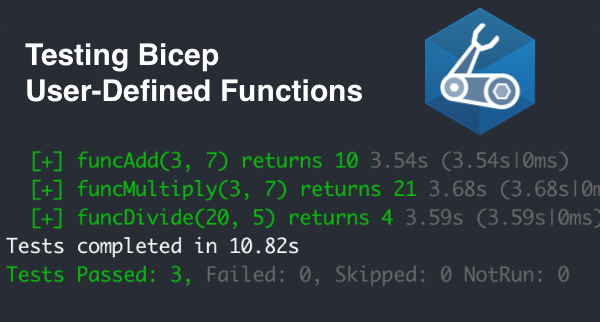
Testing Azure Bicep User-Defined Functions using Bicep Console and Pester

Azure Bicep User-Defined Functions are powerful tools for standardising and sharing logic across your organisation. However, changes to these functions can introduce errors that impact your deployments. In this blog, you will learn how to set up effective expectation versus reality test cases for your User-Defined Functions, using a simple and straightforward approach to testing your functions … Continue reading Testing Azure Bicep User-Defined Functions using Bicep Console and Pester

Automated Code Reviews in Azure DevOps using OpenAI models powered by Microsoft Foundry

Code reviews can be a tough and frustrating experience due to long wait times, nitpicking, constant context switching, and many other reasons. GitHub has offered AI-assisted code reviews for quite some time already, but unfortunately Azure DevOps has not. I wanted to see if I could improve the pull request experience by introducing an AI-powered … Continue reading Automated Code Reviews in Azure DevOps using OpenAI models powered by Microsoft Foundry

Connect Grok from Azure AI Foundry to GitHub Copilot Chat

Now that Grok-3 from xAI is available in Azure AI Foundry, I wanted to try it out with GitHub Copilot Chat. This is possible through the Bring Your Own Key feature released in Visual Studio Code. This feature allows you to connect other AI Platforms such as Anthropic, Ollama (local), Azure, and many more to … Continue reading Connect Grok from Azure AI Foundry to GitHub Copilot Chat

Control your Azure Bicep deployment flow with the fail function

Have you ever come across a scenario where you want to enforce a parameter to have a certain value because another parameter has value X? This means you’re dealing with a conditional parameter and need to validate the input before continuing the deployment. In Azure Bicep, it’s now possible to create conditional parameters and let … Continue reading Control your Azure Bicep deployment flow with the fail function