In this blog post, I share my insights on writing readable and maintainable Azure Bicep templates. After several years of working with Azure Bicep templates, I have learned that as with any other programming language, clarity and readability are key for maintainability. This blog post includes the following insights: Choose a consistent code and naming … Continue reading Enhance the readability of Azure Bicep templates with these tips
Category: infrastructure-as-code
Azure Bicep nullability operators explained
Operators are widely used in Azure Bicep. Commonly used operators include arithmetic operators like + and - for performing calculations, as well as comparison operators such as == and != and there are many more. Additionally, there are less familiar operators like !, ??, and .?, each offering unique functionality. In this blog you will … Continue reading Azure Bicep nullability operators explained
Setup Azure DevOps Workload Identity Federation using Azure Bicep
In this blog, you will learn how to set up and configure Azure DevOps service connections using workload identity federation through a user-assigned managed identity via an Azure Bicep deployment. This blog covers: A high-level design of how the Azure DevOps services connections are created using Azure Bicep The requirements needed to succesfully configure Azure … Continue reading Setup Azure DevOps Workload Identity Federation using Azure Bicep
Your first contribution to Azure Verified Modules
If you are using Azure Verified Modules, either the Bicep or Terraform modules, you have likely encountered scenarios where you wished for additional features. This blog is a practical guide to help you make your first contribution to Azure Verified Modules, enabling you to turn those additional features into reality. This blog will focus on … Continue reading Your first contribution to Azure Verified Modules
Create your own function in Azure Bicep with user-defined functions
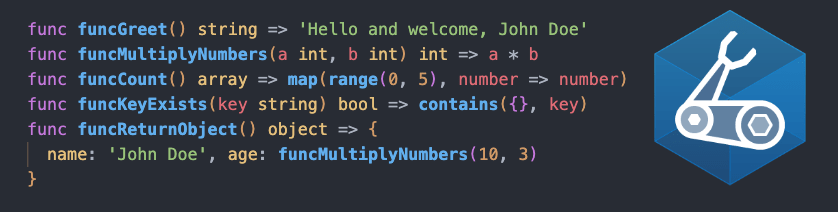
Before the release of the user-defined functions functionality, there was a “hacky” way to create your own functions, namely through creating modules and using outputs. Now with the release of user-defined functions, you can easily create your own user-defined functions. These are separate functions in addition to the built-in Bicep functions. In this blog post, … Continue reading Create your own function in Azure Bicep with user-defined functions