In GitHub Copilot, you have three built-in chat modes: Ask, Edit, and Agent. With a custom chat mode, you can create your own mode by extending the agent with your own behaviour. For example, you can add behaviour so the agent acts as a coding planner, prompt optimiser, or PowerShell expert, etc. In this blog, … Continue reading Custom Azure Bicep chat modes for GitHub Copilot
Category: infrastructure-as-code
From Prompt to Bicep: GitHub Copilot for Azure in Action
Over two years ago, I wrote about GitHub Copilot for the first time. Back then, it was powered by OpenAI Codex models, not the models we know today. GitHub Copilot has come a long way since then, where we now have frontier models such as GPT-4.1 and Sonnet 4, agent mode, extensions, and GitHub Copilot … Continue reading From Prompt to Bicep: GitHub Copilot for Azure in Action
Control your Azure Bicep deployment flow with the fail function
Have you ever come across a scenario where you want to enforce a parameter to have a certain value because another parameter has value X? This means youβre dealing with a conditional parameter and need to validate the input before continuing the deployment. In Azure Bicep, itβs now possible to create conditional parameters and let … Continue reading Control your Azure Bicep deployment flow with the fail function
Azure Bicep optional module names explained
Naming every module in Azure Bicep used to be mandatory. With the release of the optional module names setting an explicit module deployment name is now optional. With Azure Bicep version 0.34.1 you can let Bicep automatically handle module deployment names for you. In this blog, you will learn how the optional module name feature works. What is a … Continue reading Azure Bicep optional module names explained
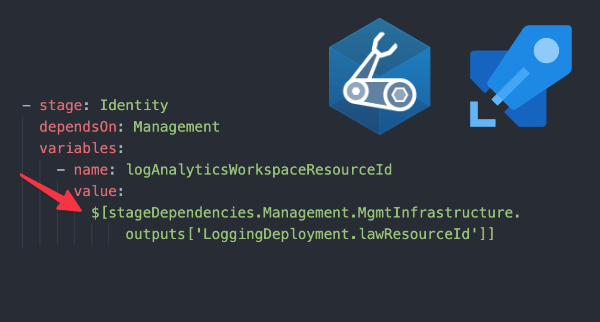
Chaining Bicep Deployments using Outputs and Stage Dependencies in Azure Pipelines
Sometimes, deploying a Bicep template using the preferred main.bicep method is not possible due to insufficient deployment permissions, especially when deploying across different subscriptions. This requires finding alternative ways to deploy your Bicep template, often involving context switching to obtain the necessary permissions. In this blog, you will learn how to leverage Azure Bicep outputs … Continue reading Chaining Bicep Deployments using Outputs and Stage Dependencies in Azure Pipelines