Exploring GitHub Copilot Code Review for Azure DevOps

GitHub Copilot code review is now available in Azure DevOps (public preview), bringing AI-assisted pull request reviews to teams that use Azure Repos. Instead of relying only on manual reviews, you can add GitHub Copilot as a reviewer and let it analyse changed code, identify potential issues, and provide comments directly in the pull request. … Continue reading Exploring GitHub Copilot Code Review for Azure DevOps →
Testing Azure Bicep User-Defined Functions using Bicep Console and Pester

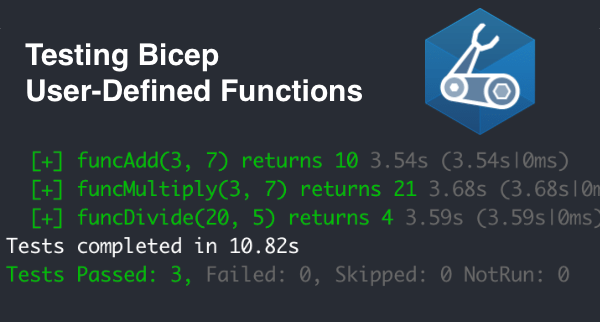
Azure Bicep User-Defined Functions are powerful tools for standardising and sharing logic across your organisation. However, changes to these functions can introduce errors that impact your deployments. In this blog, you will learn how to set up effective expectation versus reality test cases for your User-Defined Functions, using a simple and straightforward approach to testing your functions … Continue reading Testing Azure Bicep User-Defined Functions using Bicep Console and Pester →

Automated Code Reviews in Azure DevOps using OpenAI models powered by Microsoft Foundry

Code reviews can be a tough and frustrating experience due to long wait times, nitpicking, constant context switching, and many other reasons. GitHub has offered AI-assisted code reviews for quite some time already, but unfortunately Azure DevOps has not. I wanted to see if I could improve the pull request experience by introducing an AI-powered … Continue reading Automated Code Reviews in Azure DevOps using OpenAI models powered by Microsoft Foundry →

Automate pull request descriptions in Azure DevOps with Azure OpenAI

In this blog, you will learn how to leverage Azure OpenAI’s large language models to generate pull request descriptions based on the changes in your code. Overview The goal is to create seamless automation that summarises the code changes in a pull request using natural language. The text generated by the large language model (LLM) … Continue reading Automate pull request descriptions in Azure DevOps with Azure OpenAI →

Chaining Bicep Deployments using Outputs and Stage Dependencies in Azure Pipelines

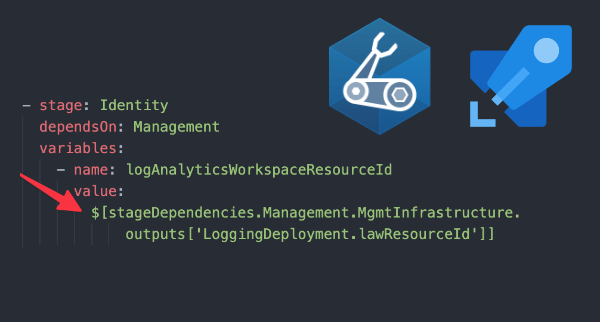
Sometimes, deploying a Bicep template using the preferred main.bicep method is not possible due to insufficient deployment permissions, especially when deploying across different subscriptions. This requires finding alternative ways to deploy your Bicep template, often involving context switching to obtain the necessary permissions. In this blog, you will learn how to leverage Azure Bicep outputs … Continue reading Chaining Bicep Deployments using Outputs and Stage Dependencies in Azure Pipelines →